
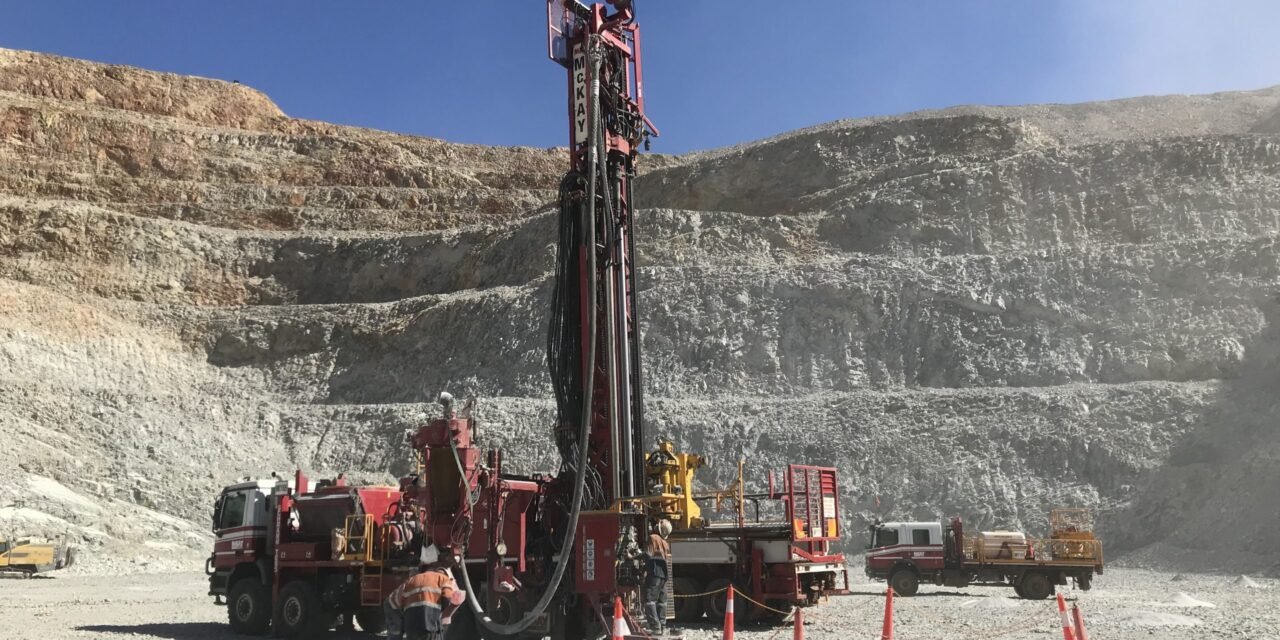
Scope and Purpose of Grade Control
Across both open‑pit and underground operations, grade control is the set of processes used to distinguish ore from waste in space and time and to assign mined material to the economically optimal destination (mill, different stockpiles, waste, etc.) (Díaz, Fernández and Álvarez, 2025; Vasylchuk and Deutsch, 2018; Dominy et al., 2018; Dominy and Platten, 2012; Dominy, 2010). It sits at the interface between the geological model and real‑time mining decisions.
Typical core functions include (Díaz, Fernández and Álvarez, 2025; Vasylchuk and Deutsch, 2018; Dominy et al., 2018; Akbar et al., 2024; Dominy and Platten, 2012; Dominy, 2010):
- Collecting high‑quality, representative samples (blast‑hole cuttings, channel samples, grab samples, face/stockpile samples)
- Fast assaying or sensing, and data management
- Short‑range grade estimation / local model updating
- Defining ore–waste / stockpile boundaries and dig limits
- Supervising mining to minimise ore loss and dilution
- Short‑term reconciliation between plan and actual production
In open pit hard‑rock mines, this often means sampling every blast hole and classifying bench material into ore, low‑grade ore, various metallurgical types, and waste; sometimes truck or shovel loads are sampled or scanned as an additional control (Díaz, Fernández and Álvarez, 2025; Vasylchuk and Deutsch, 2018; Akbar et al., 2024). In underground mines, grade control may rely more on face mapping and linear sampling, underground drilling, and grab or muck sampling, with rapid turnaround to support stope and development decisions (Dominy et al., 2018; Dominy and Platten, 2012; Dominy, 2010).
Technically, the literature shows that:
- Finer‑scale grade control models and selective mining can reduce misclassification of material by several percent, often worth millions of dollars annually (Faraj, 2024; Vasylchuk and Deutsch, 2018; Vasylchuk, 2017; Hmoud and Kumral, 2024).
- Better sampling and model updating substantially reduce dilution and ore loss, improving head grade and overall project economics (Díaz, Fernández and Álvarez, 2025; Vasylchuk and Deutsch, 2018; Dominy et al., 2018; Akbar et al., 2024; Hmoud and Kumral, 2024).
- Automation, real‑time sensing (spectrometric, hyperspectral), and advanced algorithms (simulation, machine learning) are increasingly central to modern grade control (Faraj, 2024; Da Silva, Nisenson and Boisvert, 2022; MARtín et al., 2023; Prior, Benndorf and Mueller, 2020; Xie, Xiao and Mao, 2024; Akbar et al., 2024; Hmoud and Kumral, 2024).
These characteristics have direct organizational implications: grade control is intensely operational, time‑critical, and data‑heavy, but is grounded in geological understanding.
Grade Control as a Link Between Exploration and Mining
Data Sources and Models
Long‑range resource models are built primarily from exploration and infill drilling. They are relatively sparse and are designed for resource/reserve reporting and medium‑ to long‑term planning, not day‑to‑day mining decisions (Díaz, Fernández and Álvarez, 2025; Faraj, 2024; Prior, Benndorf and Mueller, 2020; Dominy et al., 2018; Akbar et al., 2024). Once production starts, grade control data:
- Densify the information grid (e.g., blast‑hole spacing 3–10 m vs. 25 m or more for exploration) (Díaz, Fernández and Álvarez, 2025; Faraj, 2024; Vasylchuk and Deutsch, 2018).
- Capture short‑range heterogeneity not resolved in exploration models (Faraj, 2024; Vasylchuk and Deutsch, 2018; Dominy et al., 2018; Akbar et al., 2024).
- Allow continual updating of resource/grade control models to better reflect reality at the selective mining unit (SMU) scale (Prior, Benndorf and Mueller, 2020; Dominy et al., 2018; Akbar et al., 2024; Hmoud and Kumral, 2024).
Block models based solely on exploration drilling can be spatially misaligned with the true ore–waste boundaries by many meters, causing substantial dilution and ore loss if used without grade control (Díaz, Fernández and Álvarez, 2025; Vasylchuk and Deutsch, 2018; Akbar et al., 2024; Hmoud and Kumral, 2024). Grade control closes this gap and aligns the resource view of the orebody with the operational view.
Time Scales
- Exploration & long‑range planning: years to decades.
- Grade control: hours to weeks (blast‑to‑blast, bench‑to‑bench, stope‑to‑stope) (Díaz, Fernández and Álvarez, 2025; MARtín et al., 2023; Prior, Benndorf and Mueller, 2020; Dominy et al., 2018; Akbar et al., 2024).
- Mining operations: real‑time dispatching, drilling, blasting, loading, hauling.
Because grade control must provide decisions quickly (often within 24 hours for underground faces and within days for open‑pit benches) (MARtín et al., 2023; Prior, Benndorf and Mueller, 2020; Dominy et al., 2018; Akbar et al., 2024), it naturally aligns with operational mining schedules rather than exploration’s slower pace.

Technical Drivers of an Efficient Grade Control Function
Sampling, Assaying, and Representativity
High‑quality, representative, and timely sampling is repeatedly emphasized as the foundation of effective grade control (MARtín et al., 2023; Dominy et al., 2018; Dominy and Platten, 2012; Dominy, 2010). Poor sampling leads to:
- Ore misclassified as waste (ore loss).
- Waste misclassified as ore (dilution) (Díaz, Fernández and Álvarez, 2025; Vasylchuk and Deutsch, 2018; Akbar et al., 2024; Dominy, 2010).
- Poor reconciliation and loss of confidence in both geology and operations (Díaz, Fernández and Álvarez, 2025; Dominy et al., 2018; Akbar et al., 2024).
The Theory of Sampling has been applied to grade control to reduce sampling errors from collection through preparation and analysis, particularly in coarse‑gold systems where conventional chip or small‑volume samples can be highly unrepresentative (Dominy et al., 2018; Dominy, 2010). Solutions include:
- Whole‑core or bulk sampling and leaching for coarse‑gold deposits (Dominy et al., 2018).
- Larger and better‑distributed samples for nuggety veins (Dominy and Platten, 2012; Dominy, 2010).
- Strong integration between geological mapping and sampling (Dominy et al., 2018; Dominy and Platten, 2012).
Estimation, Uncertainty, and Decision Rules
Modern grade control workflows increasingly focus on:
- High‑resolution models (grid sizes ~¼ of blasthole spacing) (Vasylchuk and Deutsch, 2018; Vasylchuk, 2017).
- Explicit treatment of uncertainty in grade and blast movement, using simulation and utility/decision‑theory frameworks to optimize material destinations (Faraj, 2024; Vasylchuk and Deutsch, 2018; Vasylchuk, 2017; Hmoud and Kumral, 2024).
- Truck‑by‑truck or very small‑unit destination optimization, avoiding large polygons that mix ore and waste (Vasylchuk and Deutsch, 2018; Vasylchuk, 2017; Hmoud and Kumral, 2024).
Incorrect assumptions or ignoring uncertainty can reduce project value by 1–8% compared with optimized grade control scenarios, depending on deposit heterogeneity (Faraj, 2024; Vasylchuk and Deutsch, 2018; Hmoud and Kumral, 2024).
Blast Movement and Dig Limits
Blasting physically displaces the rock mass, distorting ore–waste boundaries established in the pre‑blast model. If blast movement is not accounted for:
- Apparent ore loss and dilution can be very large (often 9–24% ore loss in some cases) (Hmoud and Kumral, 2024; Thornton, 2009).
- Dig limits based purely on pre‑blast polygons become systematically wrong (Vasylchuk and Deutsch, 2018; Vasylchuk, 2017; Hmoud and Kumral, 2024; Thornton, 2009).
Methods to mitigate this include:
- Blast movement measurement and modeling tools that adjust ore polygons post‑blast (Vasylchuk, 2017; Thornton, 2009).
- Risk‑based optimization of dig limits under uncertainty in both grade and blast movement (Hmoud and Kumral, 2024).
These tasks require close interaction with drill‑and‑blast engineers and loading/hauling supervisors, again tying grade control tightly to the mining engineering function.
Automation, Sensors, and Data Integration
Recent advances highlight the importance of automation and sensing:
- Real‑time or near real‑time spectrometric tools (DGNAA, LIBS, FP‑XRF) for tungsten and other commodities to reduce analytical bottlenecks and allow decisions under tight time constraints (MARtín et al., 2023; Akbar et al., 2024).
- Hyperspectral imaging and machine learning applied to blast‑hole cuttings, allowing instantaneous ore–waste discrimination and more accurate boundaries, with reduced costs and time (Da Silva, Nisenson and Boisvert, 2022; Akbar et al., 2024).
- Model updating algorithms that integrate sensor data from exposed faces and conveyor‑belt analyzers to rapidly update grade control models in underground settings (Prior, Benndorf and Mueller, 2020).
- Remote sensing (e.g., Sentinel‑2 multispectral) combined with machine learning to map open‑pit grade distribution and delineate non‑ore, secondary ore, and main ore zones (Xie, Xiao and Mao, 2024).
All of these are deeply embedded in production workflows and plant feed control, requiring tight integration with operations, control rooms, and process plant rather than purely exploration teams (Prior, Benndorf and Mueller, 2020; Chirgwin, 2021; Akbar et al., 2024).

Where Should Grade Control Sit? Mining vs. Exploration
The literature does not give explicit organizational prescriptions, but its technical content implies that grade control is:
- Geology‑intensive (requiring strong geological understanding and model thinking) (Díaz, Fernández and Álvarez, 2025; Vasylchuk and Deutsch, 2018; MARtín et al., 2023; Dominy et al., 2018; Akbar et al., 2024; Dominy and Platten, 2012; Dominy, 2010).
- Operationally critical, time‑sensitive, and tightly linked to drilling, blasting, loading, hauling, and processing (Díaz, Fernández and Álvarez, 2025; Vasylchuk and Deutsch, 2018; MARtín et al., 2023; Prior, Benndorf and Mueller, 2020; Akbar et al., 2024; Vasylchuk, 2017; Hmoud and Kumral, 2024).
Below is a structured discussion of advantages and disadvantages of placing grade control under mining versus exploration.
Advantages of Grade Control Under Mining
- Alignment with Production Objectives and KPIs Grade control directly affects:
- Head grade and tonnage to the plant (Díaz, Fernández and Álvarez, 2025; Vasylchuk and Deutsch, 2018; Akbar et al., 2024; Hmoud and Kumral, 2024).
- Ore loss and dilution (Díaz, Fernández and Álvarez, 2025; Vasylchuk and Deutsch, 2018; Akbar et al., 2024; Hmoud and Kumral, 2024; Dominy, 2010).
- Short‑term production scheduling and reconciliation (Prior, Benndorf and Mueller, 2020; Dominy et al., 2018; Akbar et al., 2024).
- Integration with Drill‑and‑Blast and Material Handling Grade control must work closely with (Díaz, Fernández and Álvarez, 2025; Vasylchuk and Deutsch, 2018; Akbar et al., 2024; Vasylchuk, 2017; Hmoud and Kumral, 2024; Thornton, 2009):
- Drill and blast engineers to design patterns compatible with sampling and selective mining.
- Blast movement monitoring and adjustment of dig limits (Hmoud and Kumral, 2024; Thornton, 2009).
- Shovel, loader, truck, and dispatch operations for selective mining and truck‑by‑truck destination control (Vasylchuk and Deutsch, 2018; Akbar et al., 2024; Vasylchuk, 2017; Hmoud and Kumral, 2024).
- Faster Feedback Loops and Operational Decisions Underground mines often need assay or grade decisions in less than 24 hours for development and stope faces (Prior, Benndorf and Mueller, 2020; Dominy et al., 2018). Open‑pit operations must classify blast benches and set dig limits within tight schedules (Díaz, Fernández and Álvarez, 2025; Vasylchuk and Deutsch, 2018; MARtín et al., 2023; Akbar et al., 2024; Hmoud and Kumral, 2024). Mining‑aligned grade control teams:
- Are closer to operations control rooms and dispatch (Prior, Benndorf and Mueller, 2020; Chirgwin, 2021; Akbar et al., 2024).
- Can adjust in near real time when equipment availability, weather, or plant issues require changes in ore routing or blending.
- Better Use of Automation and Control Room Integration Automation studies emphasize that effective control rooms require staff who take a system view across people, process, technology, data, and equipment; skilled controllers can identify hidden inefficiencies along the value chain (Chirgwin, 2021). Grade control decisions naturally belong in this integrated systems environment:
- Real‑time sensors (belt analyzers, on‑shovel XRF, hyperspectral systems) feed control centers (MARtín et al., 2023; Chirgwin, 2021; Akbar et al., 2024).
- Dispatch and process control systems must incorporate grade control outputs for blending and plant optimization (Prior, Benndorf and Mueller, 2020; Chirgwin, 2021; Akbar et al., 2024).
- Direct Influence on Short‑Term Planning and Cut‑Off/Application While conceptual cut‑off grade frameworks belong to resource evaluation and feasibility (Singh, 2025), operational cut‑off and selective mining decisions—what to send where, today—are grade control problems. These must account for:
- Dynamic economics and plant constraints (Vasylchuk and Deutsch, 2018; Akbar et al., 2024; Hmoud and Kumral, 2024; Singh, 2025).
- Heterogeneity and selectivity trade‑offs (Faraj, 2024; Vasylchuk and Deutsch, 2018; Vasylchuk, 2017; Hmoud and Kumral, 2024).
- Reconciliation and Continuous Improvement Reconciliation between model, grade control, and plant results is a key driver of continuous improvement in mining (Díaz, Fernández and Álvarez, 2025; Vasylchuk and Deutsch, 2018; Dominy et al., 2018; Akbar et al., 2024; Hmoud and Kumral, 2024; Dominy, 2010). A mining‑led grade control team:
- Owns the feedback loop from the plant and stockpiles back to benches/stopes.
- Is positioned to modify dig strategies, blast designs, and selective mining tactics.
Disadvantages / Risks of Grade Control Under Mining
- Risk of Under‑Investment in Geology and Sampling Quality Management often tries to reduce costs by cutting grade control expenditure without properly evaluating impacts on sample quality and decision reliability (Dominy et al., 2018). Under a mining cost center:
- There can be pressure to reduce drilling density, sampling, or lab costs.This can lead to poorer information, higher dilution/ore loss, and larger hidden opportunity costs (Díaz, Fernández and Álvarez, 2025; Vasylchuk and Deutsch, 2018; Dominy et al., 2018; Akbar et al., 2024; Hmoud and Kumral, 2024; Dominy, 2010).
- Potential Marginalization of Geological Understanding Grade control must be built on geological mapping and interpretation, not just numbers (Dominy et al., 2018; Dominy and Platten, 2012; Dominy, 2010). Gold veins and other complex orebodies require intimate understanding of structure, geometry, and ore controls (Dominy et al., 2018; Dominy and Platten, 2012; Dominy, 2010). Under mining:
- There is a risk that geological tasks (mapping, structural analysis, conceptual modelling) get subordinated to production pressures.
- Geologists may be seen as “service providers” to operations, limiting their ability to challenge assumptions or advocate for necessary sampling/method changes (Dominy et al., 2018; Dominy and Platten, 2012).
- Short‑Termism vs. Longer‑Term Resource Stewardship Mining functions are usually evaluated on quarterly or annual production and cost metrics. Exploration and resource functions often take a longer‑term view of resource utilization and mineral conservation (Singh, 2025). If grade control is entirely under mining:
- There is a risk that decisions optimize short‑term head grade at the expense of resource recovery and longer‑term Net Present Value (e.g., aggressive high‑grading).
- The link back to resource model improvement and future pushback planning may weaken, even though grade control data are extremely valuable for that purpose (Faraj, 2024; Prior, Benndorf and Mueller, 2020; Xie, Xiao and Mao, 2024; Akbar et al., 2024; Hmoud and Kumral, 2024).
- Organizational Silos and Communication Gaps If grade control reports solely into mining, communication with exploration/resource geologists can degrade:
- Resource models may under‑utilize dense grade control data for updating and uncertainty reduction (Faraj, 2024; Prior, Benndorf and Mueller, 2020; Xie, Xiao and Mao, 2024; Akbar et al., 2024; Hmoud and Kumral, 2024).
- Geological insights from mining (e.g., unexpected structures, new ore types) may not fully feed back into exploration targeting or regional understanding (Dominy et al., 2018; Dominy and Platten, 2012; Dominy, 2010).
What if Grade Control Were Placed Under Exploration?
Although uncommon in mature operations, considering this option helps clarify trade‑offs.
Potential Advantages of Grade Control Under Exploration
- Stronger Geological Governance and Model Integrity Exploration/resource groups may be better positioned to:
- Enforce sampling standards and Theory of Sampling principles, resisting cost‑cutting that harms data quality (MARtín et al., 2023; Dominy et al., 2018; Dominy, 2010).
- Maintain consistent geological interpretation and model coherence across exploration, resource, and grade control scales (Díaz, Fernández and Álvarez, 2025; Faraj, 2024; Prior, Benndorf and Mueller, 2020; Dominy et al., 2018; Xie, Xiao and Mao, 2024; Akbar et al., 2024; Dominy and Platten, 2012; Dominy, 2010).
- Systematic Use of Grade Control Data for Resource Updating Advanced updating algorithms show that integrating production and sensor data can quickly overwrite the initial conditioning information and greatly improve local model accuracy (Prior, Benndorf and Mueller, 2020). Exploration‑led ownership of models might:
- Ensure systematic incorporation of grade control data into resource models.
- Enhance cross‑scale geostatistical consistency and uncertainty quantification (Faraj, 2024; Prior, Benndorf and Mueller, 2020; Xie, Xiao and Mao, 2024; Akbar et al., 2024; Hmoud and Kumral, 2024).
- Strategic, Long‑Term View of Cut‑Off and Resource Utilization Exploration/resource teams are more aligned with:
- Optimizing cut‑off grade for long‑term NPV and resource conservation (Singh, 2025).
- Designing strategies like Grade Engineering® and pre‑concentration that require integrated thinking across the mine’s life (Carrasco et al., 2017; Singh, 2025).
Major Disadvantages of Grade Control Under Exploration
- Weak Integration with Production Cycle Grade control deadlines are imposed by shift patterns, blasting schedules, and plant feed requirements (Díaz, Fernández and Álvarez, 2025; Vasylchuk and Deutsch, 2018; MARtín et al., 2023; Prior, Benndorf and Mueller, 2020; Dominy et al., 2018; Akbar et al., 2024; Vasylchuk, 2017; Hmoud and Kumral, 2024). Exploration organizations:
- Typically do not operate on hour‑to‑hour or shift‑to‑shift cycles.
- Lack direct authority over drill‑and‑blast, loading, hauling, and plant dispatch.
- Limited Influence on Operational Tactics Many key grade control levers—blast pattern designs, flitch heights, equipment selectivity (e.g., backhoe versus large shovel), ore sorting equipment, and truck‑by‑truck routing—are controlled by mining engineers and production supervisors (Faraj, 2024; Vasylchuk and Deutsch, 2018; Akbar et al., 2024; Vasylchuk, 2017; Hmoud and Kumral, 2024). Grade control under exploration may:
- Provide recommendations that operations cannot or do not implement.
- Struggle to influence day‑to‑day dig limits, stockpile management, and shovel/truck assignment.
- Reduced Integration with Automation and Control Rooms Modern control rooms are central to autonomous operations and integrated value‑chain optimization (Prior, Benndorf and Mueller, 2020; Chirgwin, 2021; Akbar et al., 2024). They require:
- Close coupling between controllers, FMS, sensors, and grade data.
- Job designs and training tuned to operational demands (Chirgwin, 2021).
- Accountability and KPI Mismatch If grade control decisions are made by an exploration‑led function, but production KPIs (tonnes, grade, cost) are owned by mining:
- Mining may blame exploration/grade control for poor head grades or reconciliation issues.
- Exploration may lack operational levers to correct issues, creating organizational friction.

Why Grade Control Is Generally Not Under Exploration: A Synthesis
While there is no formal research “verdict,” the technical literature and industry practice point to several underlying reasons why grade control is usually housed under mining (often in a geology/grade control group within the mining department):
- Operational Criticality and Time Sensitivity Grade control delivers decisions on timeframes that are inseparable from mining operations: which flitch to mine; which truck goes to which stockpile; whether a development round is ore or waste (Díaz, Fernández and Álvarez, 2025; Vasylchuk and Deutsch, 2018; MARtín et al., 2023; Prior, Benndorf and Mueller, 2020; Dominy et al., 2018; Akbar et al., 2024; Vasylchuk, 2017; Hmoud and Kumral, 2024; Dominy, 2010). Exploration’s traditional governance, budgeting, and time horizons are ill‑suited to these pressures.
- Integration with Drill‑and‑Blast and Material Handling Blast design, blast movement, and dig limit optimization are central to grade control and are engineering/operations functions (Vasylchuk and Deutsch, 2018; Vasylchuk, 2017; Hmoud and Kumral, 2024; Thornton, 2009). Co‑locating grade control with those responsible for designing and executing blasts and mining improves both feasibility and effectiveness.
- Control Room and Automation Trends With mining automation, remote operations centers and mine controllers increasingly orchestrate entire value chains, including grade‑based decisions (Prior, Benndorf and Mueller, 2020; Chirgwin, 2021; Akbar et al., 2024). Grade control must be deeply integrated into these real‑time systems, which are operational, not exploration‑based.
- KPI Alignment and Profit Accountability The immediate economic impact of grade control—on head grade, dilution, ore loss, and misclassification costs—falls within the mining operation’s profit and loss (Díaz, Fernández and Álvarez, 2025; Faraj, 2024; Vasylchuk and Deutsch, 2018; Dominy et al., 2018; Akbar et al., 2024; Vasylchuk, 2017; Hmoud and Kumral, 2024; Dominy, 2010). Placing grade control under mining aligns incentives and clarifies accountability.
- Exploration’s Distinct Mandate Exploration focuses on discovery, resource definition, and strategic resource growth, often across multiple properties and over long horizons. Grade control is mine‑site, production‑focused, tactical, and repeatedly cycles through the same orebody volume. The skills, culture, and metrics of exploration are different from what high‑performance grade control requires.
Toward an Optimal Model: Mining‑Led Grade Control with Strong Geological Governance
An efficient, optimal grade control function typically looks like:
- Organizationally: A grade control geology team embedded in the mining/operations organization, but with strong professional reporting or technical governance links to the central geology/resource group.
- Functionally:
- Deeply involved in short‑term scheduling, blast design reviews, and control room/dispatch.
- Responsible for sampling, assaying, local modelling, and material destination decisions.
- Collaborating closely with exploration/resource geologists on model updates and longer‑term interpretations.
- Technically:
- Applying best‑practice sampling and Theory of Sampling principles (MARtín et al., 2023; Dominy et al., 2018; Dominy, 2010).
- Using advanced geostatistics, simulations, and ML to address uncertainty and improve decisions (Faraj, 2024; Vasylchuk and Deutsch, 2018; Da Silva, Nisenson and Boisvert, 2022; Prior, Benndorf and Mueller, 2020; Xie, Xiao and Mao, 2024; Akbar et al., 2024; Vasylchuk, 2017; Hmoud and Kumral, 2024).
- Incorporating blast movement, equipment selectivity, and operational constraints explicitly (Vasylchuk and Deutsch, 2018; Akbar et al., 2024; Vasylchuk, 2017; Hmoud and Kumral, 2024; Thornton, 2009).
- Integrating real‑time sensor data and automation wherever economic (MARtín et al., 2023; Prior, Benndorf and Mueller, 2020; Chirgwin, 2021; Akbar et al., 2024).
This hybrid model attempts to capture the main advantages of being under mining (operational integration, accountability, responsiveness) while mitigating disadvantages via strong geological standards and structured collaboration with exploration and resource functions.
Example Table: Grade Control Tasks and Organizational Alignment
| Grade Control Task | Stronger Link to | Organizational Implication |
|---|---|---|
| Blast‑hole sampling & assaying | Mining operations | Must fit drill/blast schedule and production targets |
| Short‑range grade estimation & uncertainty | Geology/resource | Needs geostatistics, geological understanding |
| Blast movement modeling & dig limits | Mining engineering | Dependent on blast design and equipment |
| Real‑time sensor integration & control room decisions | Mining/control | Requires integration with FMS/plant control |
| Model updating and long‑term resource refinement | Exploration/resource | Uses grade control data to refine resource models |
Figure 4: How Grade Control Tasks Align with Mining and Exploration
In summary, grade control is geologically grounded but operationally driven. The technical literature shows that its effectiveness depends on tight integration with drilling, blasting, loading, hauling, and processing systems, as well as on fast and high‑quality data flows. These requirements largely explain why grade control teams belong under the mining umbrella, ideally with strong cross‑links to exploration and resource geology to ensure long‑term model quality and resource stewardship.
References
Díaz, A., Fernández, C., & Álvarez, I., 2025. Grade Control in One of the Biggest Open Pit Mines in Europe: Corta Atalaya, Riotinto. Minerals. https://doi.org/10.3390/min15010044
Faraj, F., 2024. Grade control drillhole spacing and mining selectivity determination using high resolution simulations applied on distinctly heterogeneous open pit mines. Mining Technology, 133, pp. 369 – 382. https://doi.org/10.1177/25726668241270400
Vasylchuk, Y., & Deutsch, C., 2018. Improved grade control in open pit mines. Mining Technology, 127, pp. 84 – 91. https://doi.org/10.1080/14749009.2017.1363991
Da Silva, C., Nisenson, J., & Boisvert, J., 2022. Grade Control with Ensembled Machine Learning: A Comparative Case Study at the Carmen de Andacollo Copper Mine. Natural Resources Research, 31, pp. 785 – 800. https://doi.org/10.1007/s11053-022-10029-8
MARtín, R., Diego, I., cAStAñón, c., & AlonSo, t., 2023. A Grade Control Method without Sampling Preparation Based on Spectrometric Techniques and the Use of Electronic Detonators in an Open Pit Tungsten Deposit. Archives of Mining Sciences. https://doi.org/10.24425/ams.2023.148151
Prior, Á., Benndorf, J., & Mueller, U., 2020. Resource and Grade Control Model Updating for Underground Mining Production Settings. Mathematical Geosciences, 53, pp. 757-779. https://doi.org/10.1007/s11004-020-09881-2
Dominy, S., Glass, H., O’Connor, L., Lam, C., & Purevgerel, S., 2018. Integrating the Theory of Sampling into Underground Mine Grade Control Strategies: Case Studies from Gold Operations. Minerals. https://doi.org/10.3390/min8060232
Xie, H., Xiao, D., & Mao, Z., 2024. Exploration of grade distribution in iron mines based on rough set extreme learning machine and multispectral. Expert Syst. Appl., 265, pp. 125938. https://doi.org/10.1016/j.eswa.2024.125938
Chirgwin, P., 2021. Skills development and training of future workers in mining automation control rooms. Computers in Human Behavior Reports. https://doi.org/10.1016/j.chbr.2021.100115
Akbar, S., Abdolmaleki, M., Ghadernejad, S., & Esmaeili, K., 2024. Applying Knowledge-Based and Data-Driven Methods to Improve Ore Grade Control of Blast Hole Drill Cuttings Using Hyperspectral Imaging. Remote. Sens., 16, pp. 2823. https://doi.org/10.3390/rs16152823
Vasylchuk, Y., 2017. Integrated System for Improved Grade Control in Open Pit Mines. **. https://doi.org/10.7939/r3m902b2t
Hmoud, S., & Kumral, M., 2024. Risk-Based Optimization of Post-Blast Dig-Limits Incorporating Blast Movement and Grade Uncertainties with Multiple Destinations in Open-Pit Mines. Natural Resources Research, 34, pp. 193 – 214. https://doi.org/10.1007/s11053-024-10428-z
Dominy, S., & Platten, I., 2012. Grade control geological mapping in underground gold vein operations. Applied Earth Science, 121, pp. 96 – 103. https://doi.org/10.1179/1743275812y.0000000019
Carrasco, C., Keeney, L., Napier-Munn, T., & Bode, P., 2017. Unlocking additional value by optimising comminution strategies to process Grade Engineering® streams. Minerals Engineering, 103, pp. 2-10. https://doi.org/10.1016/j.mineng.2016.07.020
Dominy, S., 2010. Grab sampling for underground gold mine grade control. Journal of The South African Institute of Mining and Metallurgy, 110, pp. 277-287.
Thornton, D., 2009. The Implications of Blast-Induced Movement to Grade Control. **.
Singh, N., 2025. Cut-off Grade-A Concept. International Journal For Multidisciplinary Research. https://doi.org/10.36948/ijfmr.2025.v07i05.56528


