
Exploration Starts It All
Exploration as the Key to Resources, Decisions, and Sustainable Futures.
Systematic exploration turns geological uncertainty into insights, reducing risk and enabling sustainable mining.

Dare to Explore, Discover, and Transform the Future
Exploration is the heartbeat of progress—where bold ideas meet real impact and growth begins with you.
Exploration ignites innovation, shaping tomorrow together

Together, we explore beyond boundaries unlocking insight, driving transformation.
- → Empowering your exploration journey
- → Turning models into insight
- → Transforming data strategic exploration
- → Compliance to shape a sustainable future
Dare to Explore, Discover, and Transform the Future

Exploration fuels strategy—where bold ideas meet real impact.
- → Proper exploration will smart mine design
- → Resources optimization exploration data
- → Scheduling aligned exploration strategy
- → Production strengthened by exploration
Exploration starts it all-growth begin with you

Discovery sparks question. We transform geology into advantage.
- → Resources estimation with purpose
- → Reserve conversion with strategy
- → Regulatory compliance with precision
- → Reserve statements with authority
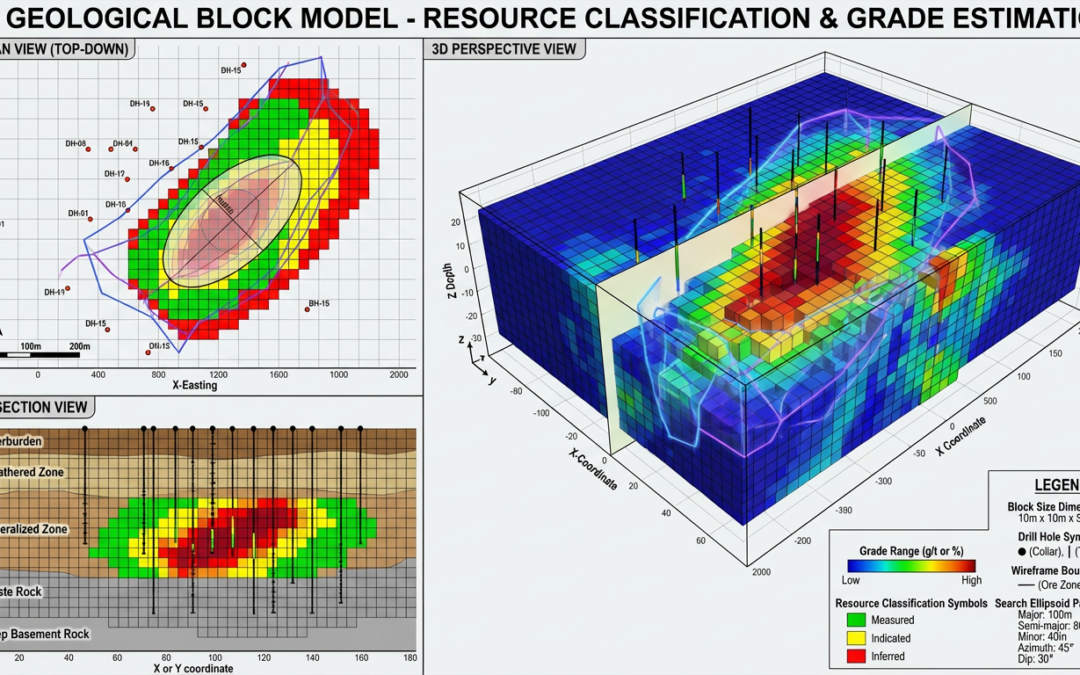
Conducting Reliable Mineral Resource Investigations: A Comprehensive Technical Guide Aligned with SNI 4726-2019
Executive Summary This technical report provides a comprehensive framework for conducting mineral resource investigations that produce reliable estimates compliant with the Indonesian National Standard for Reporting Exploration Results, Mineral Resources, and Mineral Reserves (SNI 4726-2019).…
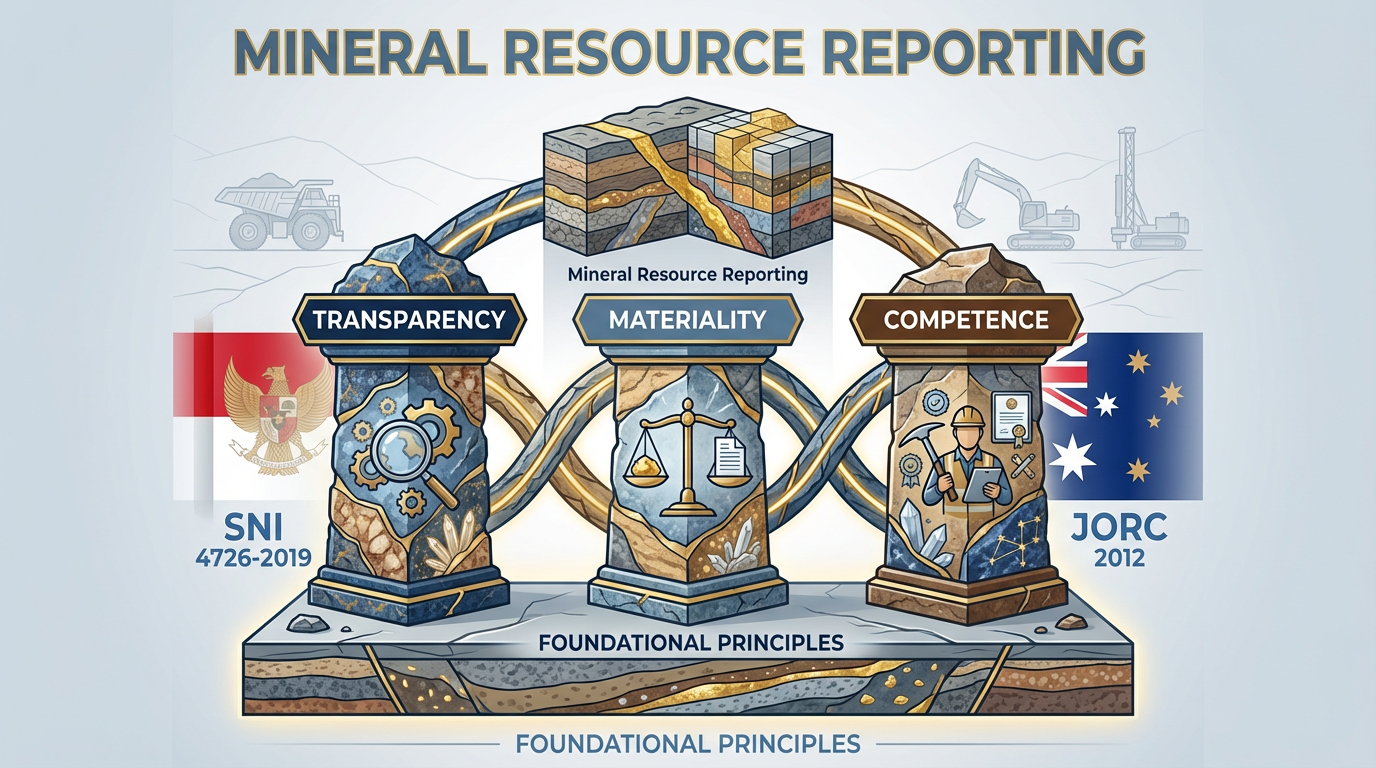
Comprehensive Crosswalk Analysis: SNI 4726-2019 Indonesian Mineral Reporting Guidelines vs. JORC 2012 Australian Code
Executive Summary This report presents a comprehensive crosswalk analysis comparing SNI 4726-2019 (Indonesian National Standard for Reporting Exploration Results, Mineral Resources, and Mineral Reserves) with JORC 2012 (Australasian Code for Reporting of Exploration Results, Mineral…
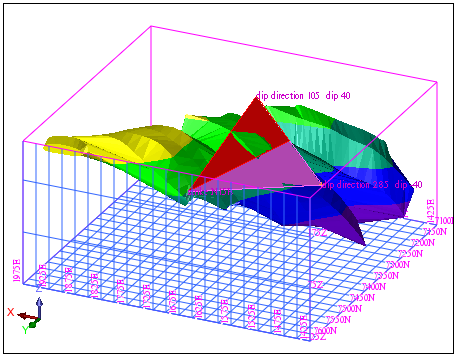
Ordinary Kriging vs Indicator Kriging dalam Estimasi Sumber Daya
Ringkasan Eksekutif Artikel teknis ini menyediakan perbandingan komprehensif antara Ordinary Kriging (OK) dan Indicator Kriging (IK), dua metode geostatistik fundamental yang digunakan dalam estimasi sumber daya mineral. Ordinary Kriging menghasilkan nilai estimasi terbaik tunggal untuk atribut model blok dengan menghitung…
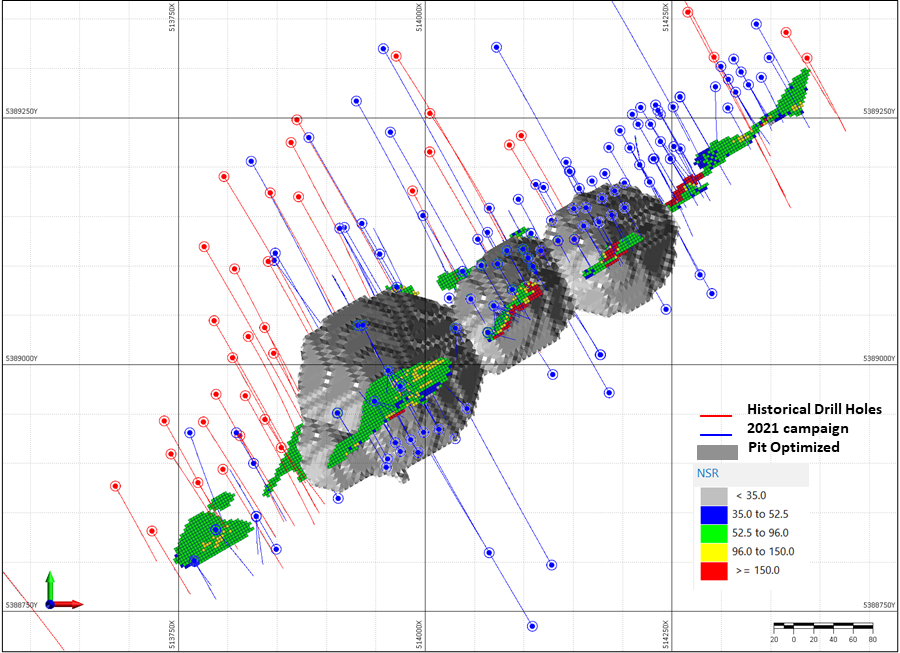
Economic Cut‑Off Grade for Nickel vs. Resource‑Estimation Cut‑Off Grade
The literature distinguishes clearly between economic cut‑off grade (COG) used for mine planning/operation and geological cut‑off grade used to report mineral resources. Both are usually called “cut‑off grade”, but they are conceptually and numerically different.…
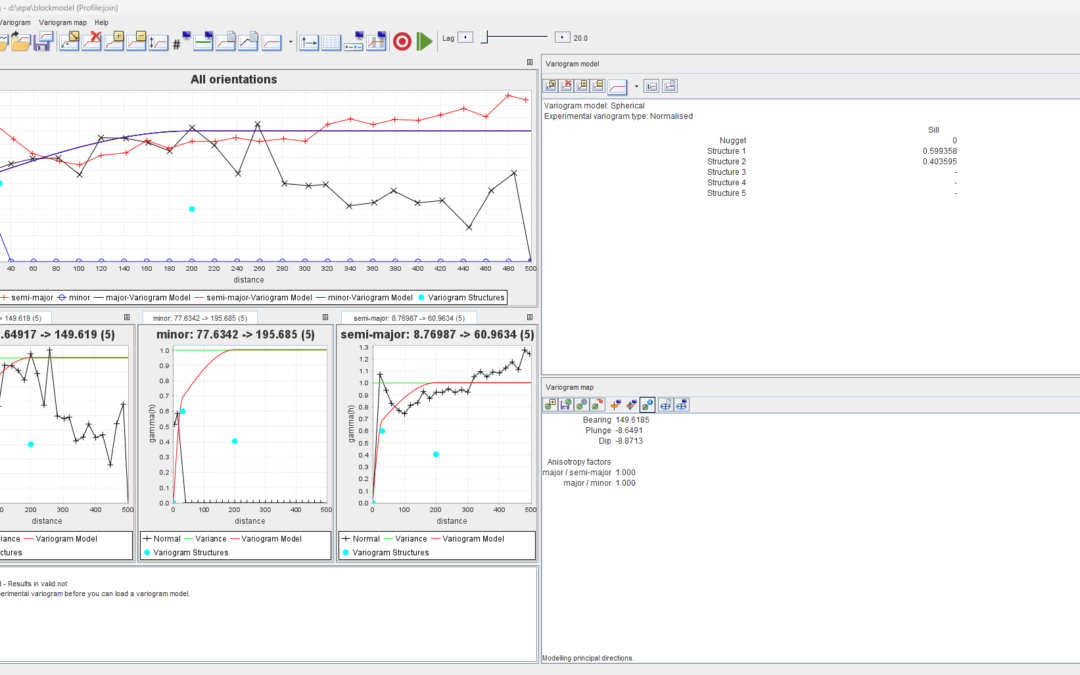
Variogram Validation and Its Role in Resource Block Modelling
Variogram validation is central to building reliable geostatistical models and, ultimately, trustworthy resource block models in mining and petroleum applications. A sound variogram links sparse sample data to 3D estimates and uncertainty. What Is Variogram…
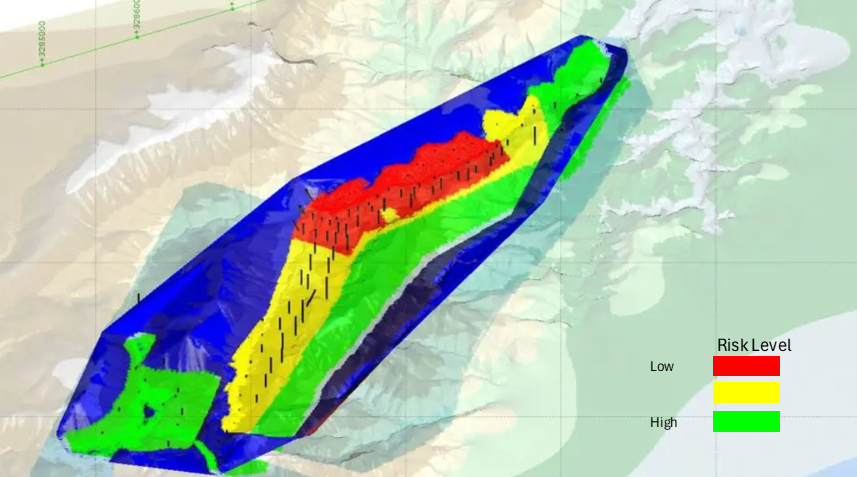
Risk Management, Exploration Results, and Resource Estimation: An Integrated, Risk‑Scored Framework
Mineral projects must link exploration data, resource models and risk management in a transparent, quantitative way to support investment and operational decisions (Lindi et al., 2024; Rossi and Deutsch, 2013; McManus et al., 2021). Conceptual…

Block Model Size, Kriging Accuracy, and Resource Classification: A Practical Overview
Block model design strongly influences how accurately tonnage and grade are estimated and how confidently resources can be classified. This article explains how different block sizes (20×20×10 m vs 5×5×5 m) interact with a 2…

How software like GEOVIA Surpac supports resource classification
Geology and mine‑planning packages (e.g., GEOVIA Surpac) integrate the full workflow from data to classified resources. Their tools do not “decide” the classification for you, but they calculate the quantitative metrics and provide visual controls that…
Connecting Resource Estimation Block Models to Mine Planning
Role of the Block Model in Planning A resource block model becomes useful to mine planning only when it is deliberately designed, populated and post‑processed with planning decisions in mind. The connection is both conceptual (what variables…

Geovia Surpac Variogram Analysis: Geostatistics for 3D Mine Planning and Resource Estimation
Geovia Surpac and Variogram Experiments in Geostatistics Geostatistics relies on variograms to quantify how a geological variable (such as grade) changes with distance in space. Modern mine‑planning workflows increasingly depend on 3D software like Geovia…